

Users want to save money with time-based energy pricing, but without clear, timely guidance, they default to expensive peak-time habits, limiting both user savings and Octopus Energy’s Agile pricing adoption. By making cheap energy windows obvious and actionable, we can help users shift usage off-peak and unlock the full value of Agile pricing.
context
Energy prices change hourly, but users don’t know when to act.
Octopus Energy’s Agile pricing offers cheaper off-peak electricity, but users struggle to align their usage with fluctuating prices because pricing data isn’t translated into clear, timely guidance. As shown in the charts below, energy usage continues to peak when prices are highest, driven by routine rather than intent, while cheaper windows later in the day go unnoticed or unused.
This isn’t a pricing problem; it’s a decision-clarity problem.
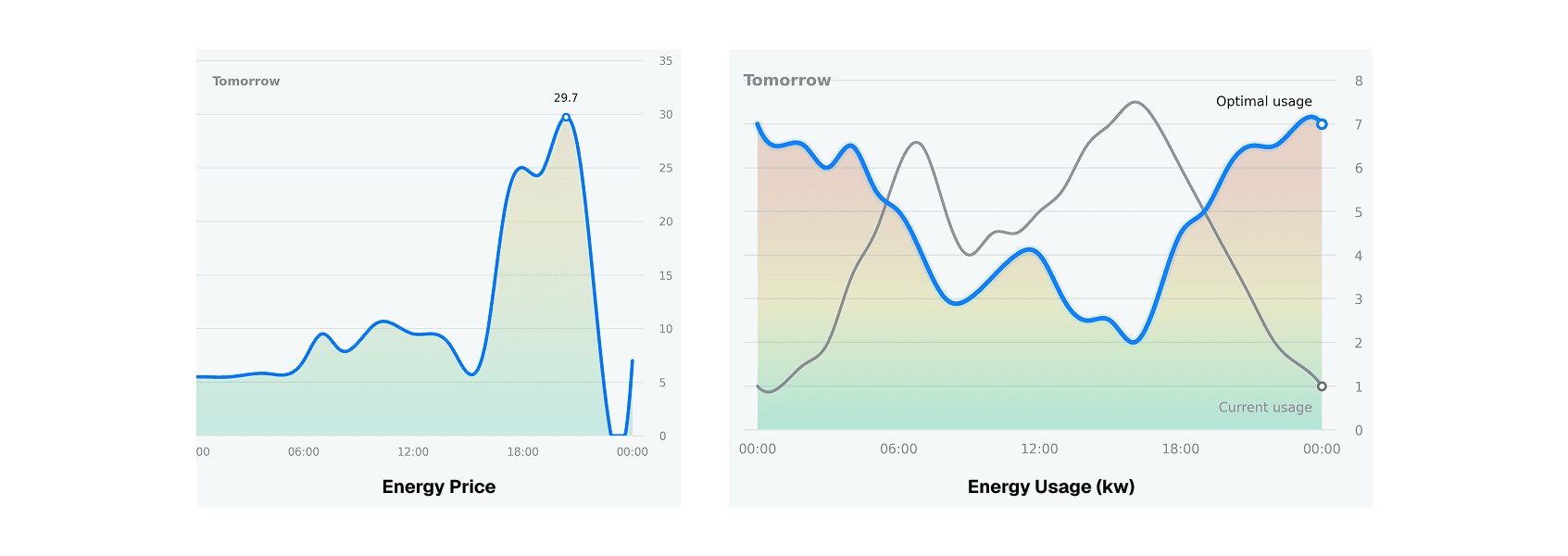
Why this is a problem
When users can’t easily identify the cheapest times to use energy, they default to habitual peak-time usage, leading to higher bills and reduced confidence in Agile pricing. For Octopus Energy, this limits adoption of time-of-use behaviours, weakens the perceived value of dynamic pricing, and reduces long-term engagement, preventing both users and the business from fully realizing the benefits of flexible energy pricing.
Solution Overview
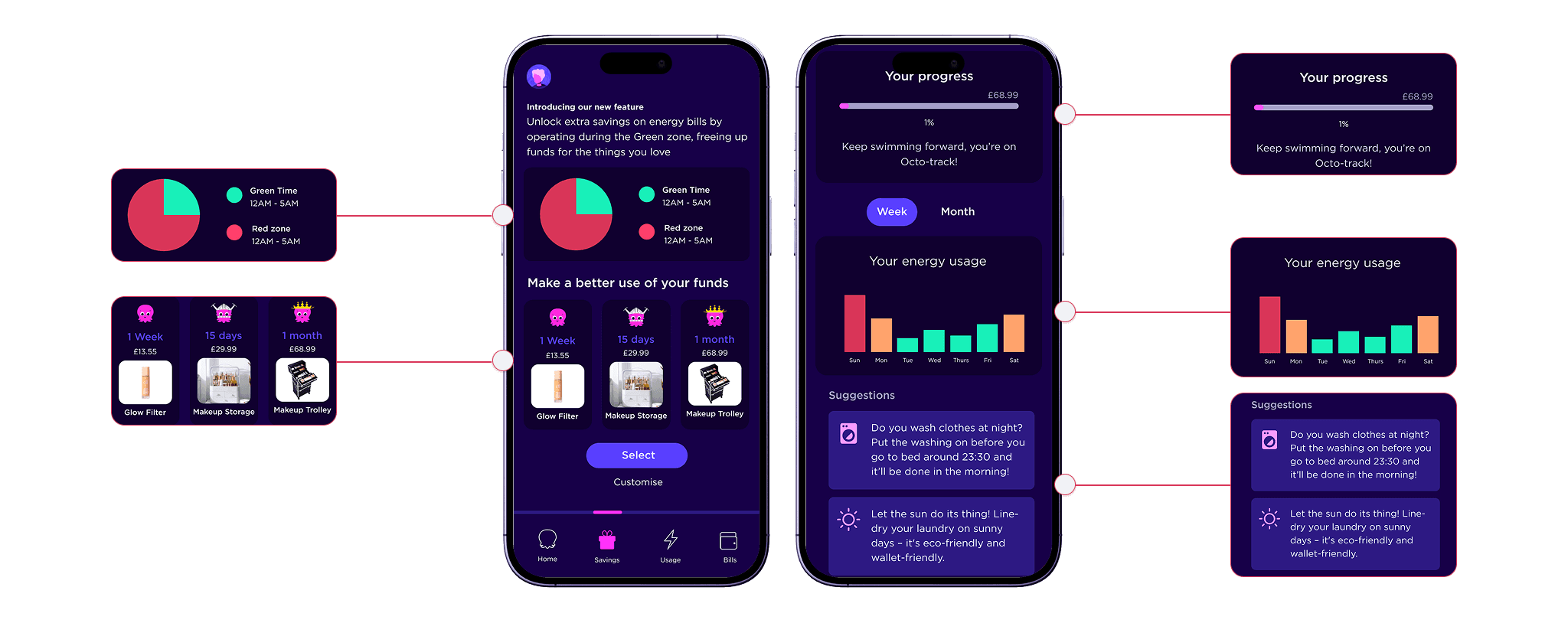
We designed a product experience that reduces decision effort by turning complex energy pricing into simple, real-time guidance. The solution highlights when energy is expensive or cheap, helps users plan usage through personalized savings goals, and reinforces better habits with progress feedback and timely, context-aware suggestions.
Expected Impact
By making cheaper energy windows visible, actionable, and easy to track, this solution helps users shift more of their usage into off-peak periods, leading to more consistent savings and higher confidence in Agile pricing. For Octopus Energy, this drives stronger adoption of time-based behaviours, reinforces the value of dynamic pricing, and improves long-term engagement.
problem
What is really getting in the way
When energy decisions require interpretation, users default to inaction. Through analysis of usage patterns and pricing behaviour, three decision barriers consistently emerged:
High cognitive load at decision time
Interpreting charts or tariffs takes effort. When decisions feel complex or uncertain, users delay action and fall back on routine.
Low immediacy of savings
Cheaper windows feel abstract or distant. Without a clear sense of what they gain right now, savings alone don’t motivate change.
No feedback loop
Behaviour change is invisible once the moment passes. Without progress signals, users can’t tell if they’re improving, making new habits hard to sustain.
Design implication: reduce cognitive load, make savings feel immediate, and reinforce progress over time.
target user
Cost-aware users constrained by habit, not intent
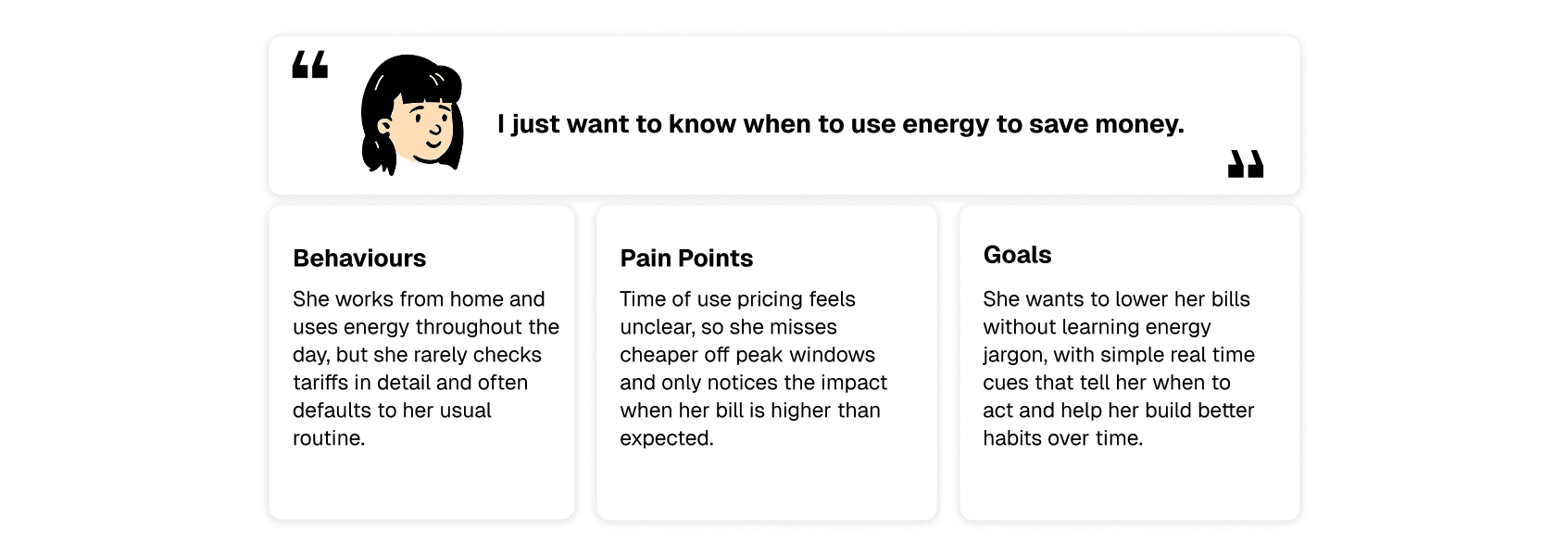
To ground the problem in a real routine, we focused on Sarah, a 27 year old marketing manager in London who works from home and closely watches her bills. She is not looking for more information. She wants confidence. If pricing is unclear, she defaults to the safest option, doing nothing. Our job was to make the next best action feel obvious in the moment, so she can save without learning energy jargon.
Looking across the market, most providers rely on fixed off-peak discounts or expect users to actively monitor prices and plan ahead. Octopus Energy already has best-in-class real-time pricing through Agile, the challenge is helping users notice the moment and feel confident acting on it.
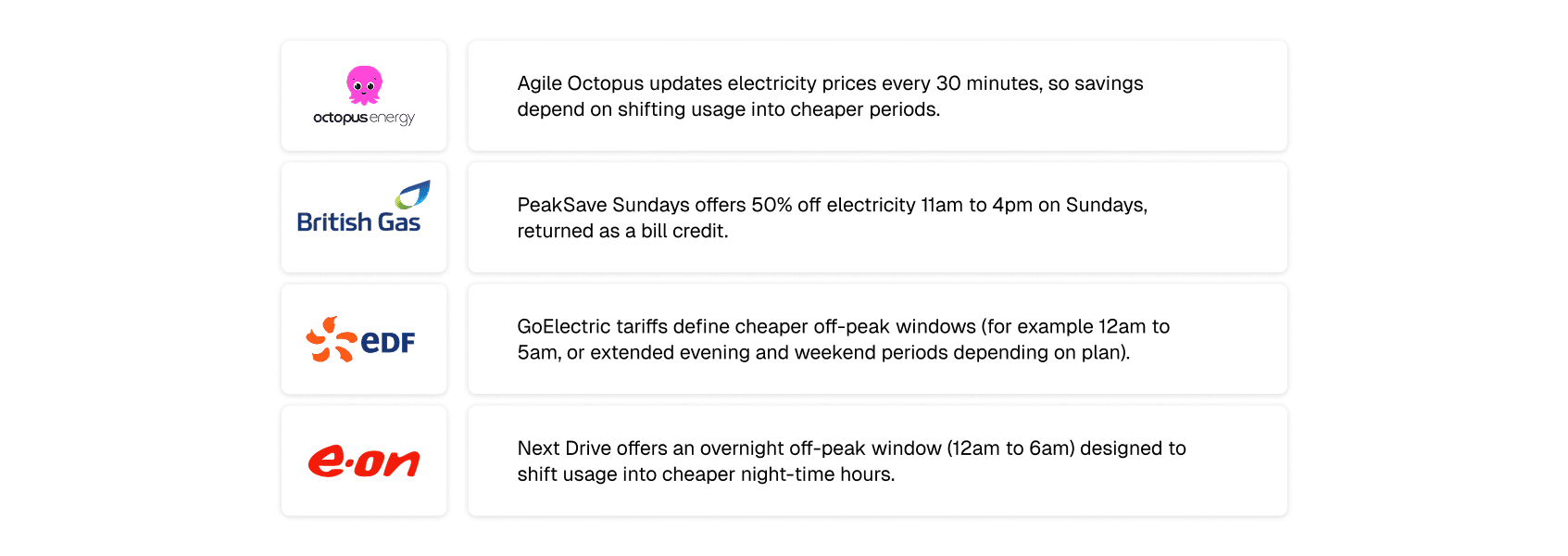
This insight shaped our direction: turn pricing signals into clear prompts in the moment, then reinforce better timing through goals, progress, and practical tips.
solution
The solution is real time cues goals and rewards
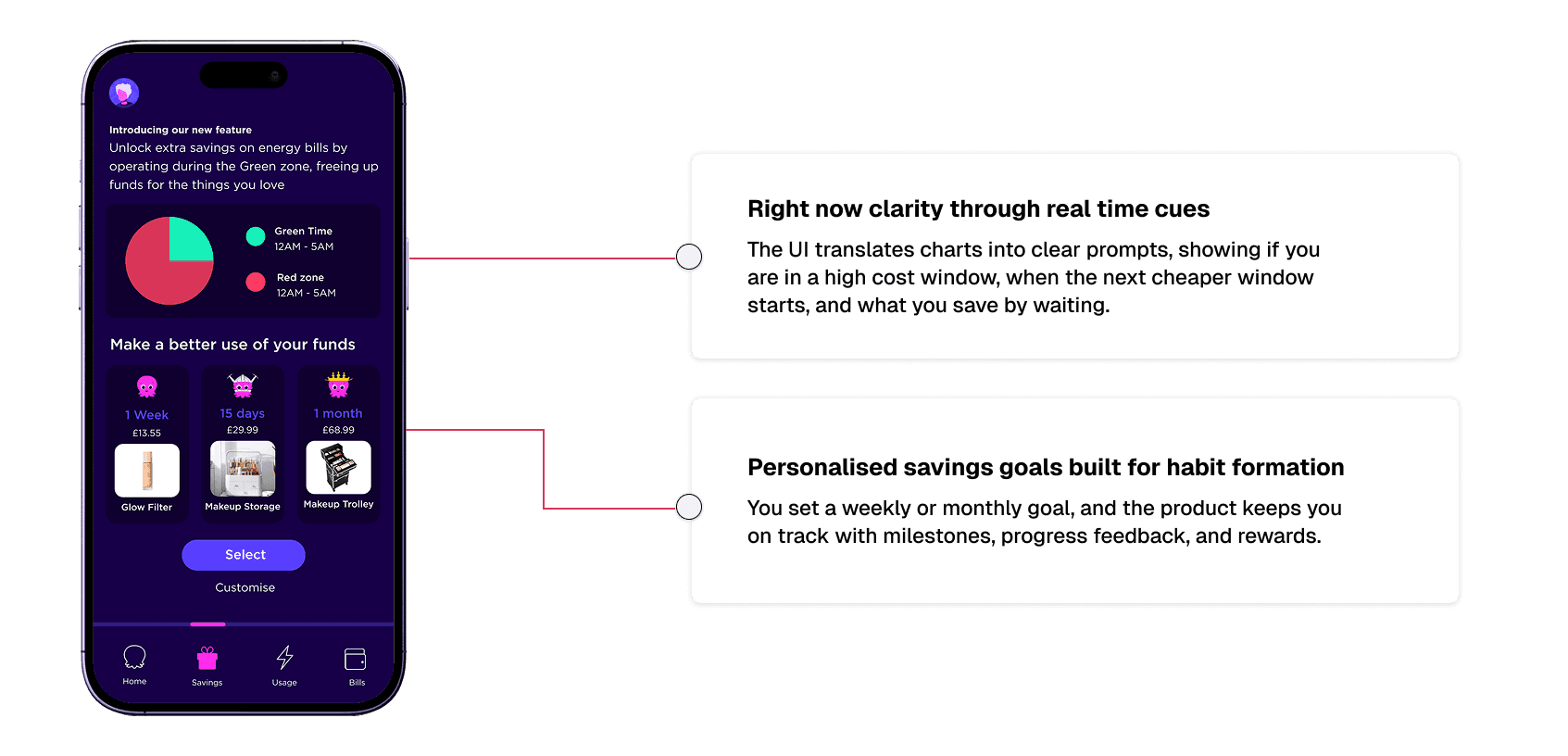
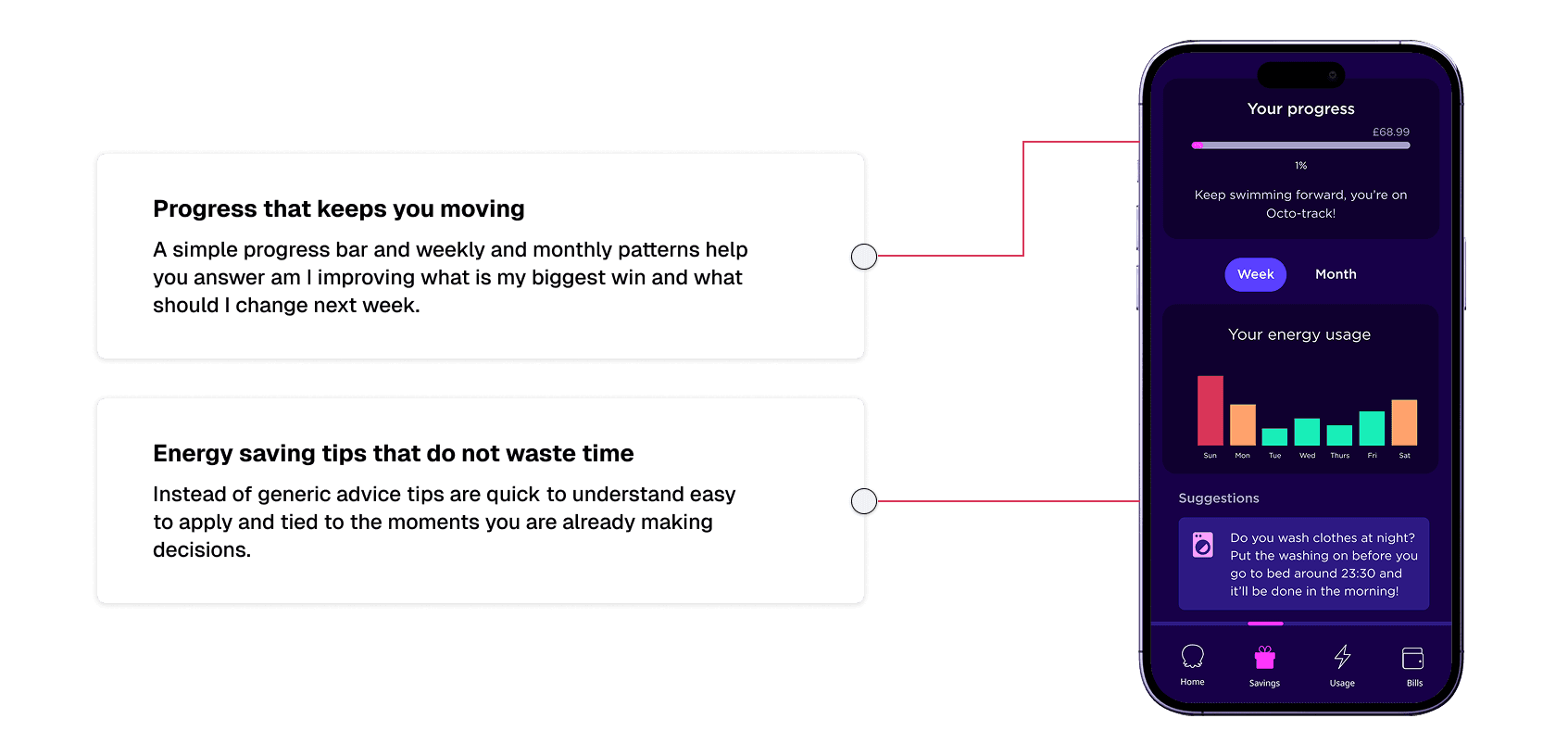
The experience provides immediate clarity on current cost windows, supports planning through personalised savings goals, and sustains behaviour change with progress tracking and timely suggestions embedded into everyday routines.
Why it works
The problem isn’t missing data, it’s missing clarity. By translating pricing into decisions users can make in the moment and reinforcing those decisions over time, the product helps savings compound naturally without requiring constant attention or manual planning.
delivery and pitch
Feedback from Judges
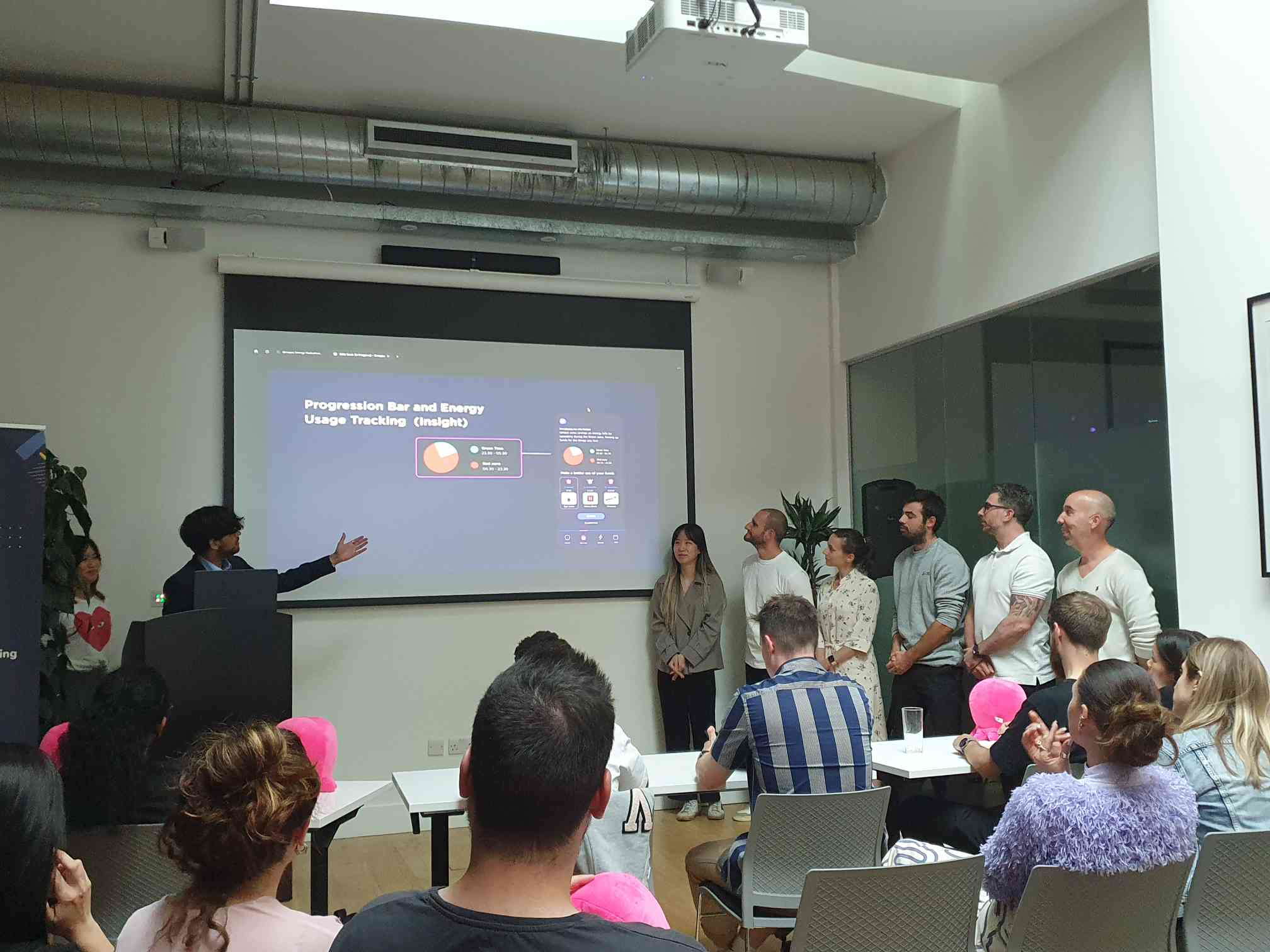
We worked in a team of eight during a 24-hour hackathon, covering problem framing, behavioural analysis, concept design, UI flows, and a final pitch. We presented to Octopus Energy judges in a 10-minute session, followed by Q&A focused on feasibility and adoption.